We’ve all heard it: ‘Eat more fiber!’ It’s supposed to be the magic bullet for digestion. But what if that constant advice is actually making things worse? It turns out, the story of fiber is a lot more complicated than we’ve been told. If you are eating high-fiber but still feel bloated or constipated, you might be looking in the wrong place for digestive bliss.
Key Takeaways
- Physiology first: You cannot poop effectively without bile, and you don’t release bile without fat.
- The lubrication factor: Bile acts as the body’s natural detergent and lubricant; without it, stool is dry and immobile.
- Fiber types matter: Grain fiber is abrasive and drying, while fruit fiber gels and marine fiber heals.
- The solution: Regular bowel movements are driven by the combination of animal fat (to trigger bile) and the right type of fiber—not just “more” fiber.
Introduction
For decades, fiber has been sold as the miracle for a happy gut. But what if I told you that this simple mantra is part of the problem? We’ve been told fiber is the main character in the digestive drama, but it is actually just a supporting actor. The real star, the one that keeps the whole show running smoothly, is the one we’ve been told to limit: Fat.
There is a physiological reality most people ignore: You don’t poop without bile.
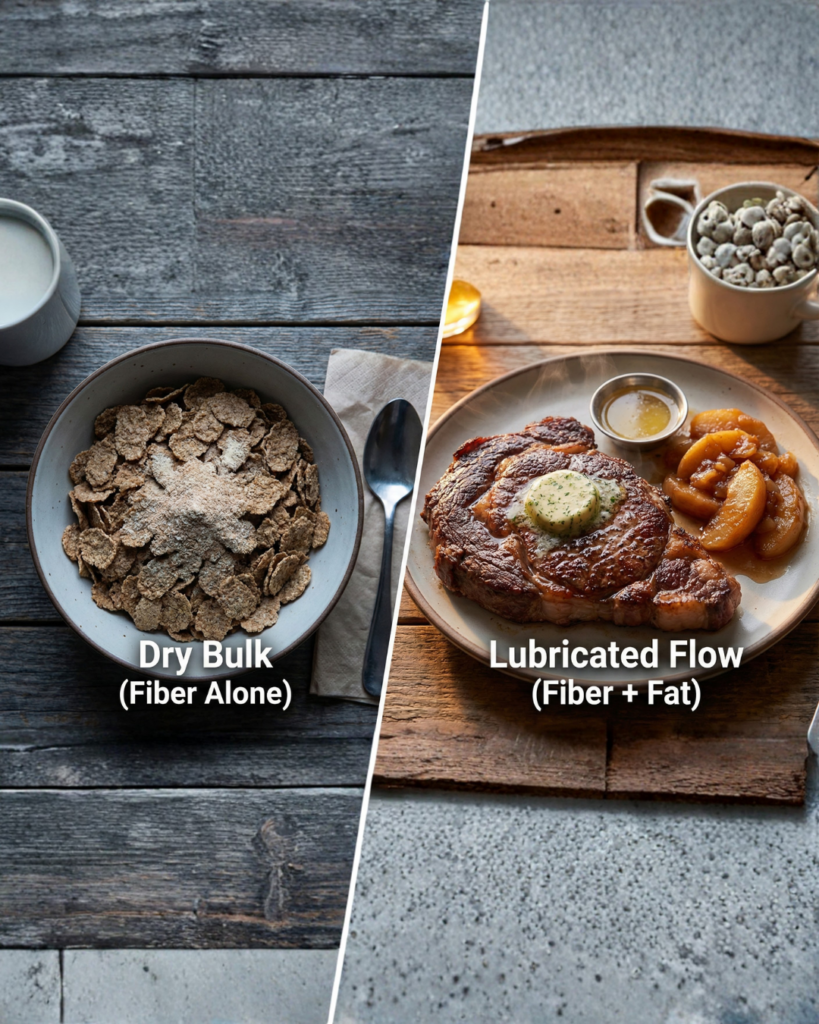
Bile is the gatekeeper of digestion. It emulsifies fats, but more importantly, it lubricates the stool and signals peristalsis (the wave-like motion of the gut). If you don’t eat fat, you don’t release bile. If you don’t release bile, your gut becomes dry and sluggish—no matter how much cereal you eat. This explains why adding meat and animal fat often wakes up the gut better than a bowl of bran flakes.
The Physiology of Pooping (It’s Not Just Fiber)
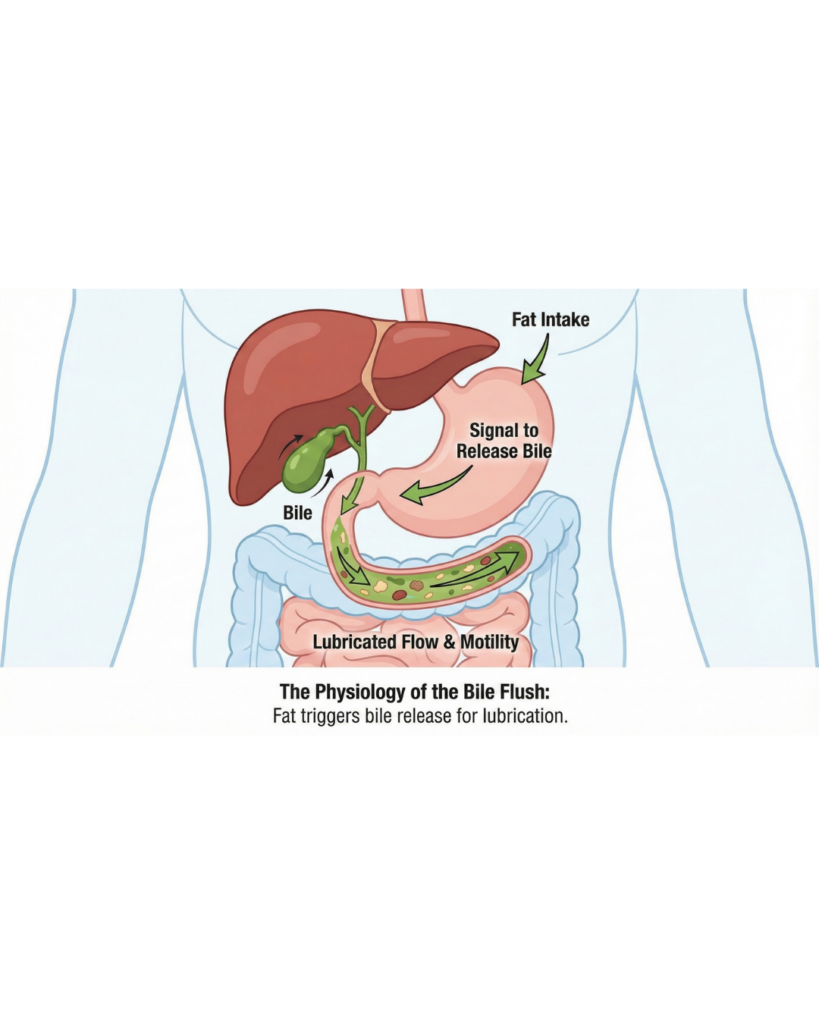
We are told that constipation is a lack of bulk. But often, constipation is actually a lack of slip.
Think of your digestive system like a slide. Fiber adds the “sand” (bulk), but bile adds the “water” (slip). If you add sand to a dry slide, you just create a traffic jam.
- Animal Fat → Stimulates the gallbladder to release bile.
- Bile → Emulsifies fats and lubricates the stool.
- Bile → Signals the gut wall to contract (move things along).
When someone eats a diet that is Low Fat + High Fiber (especially processed grain fiber), the stool becomes dry, bulky, and immobile. It hurts to move because the body has nothing slippery to help it along.
Why All Fiber Is Not Created Equal (The 4 Categories)
“Fiber” isn’t one thing. According to holistic physiology, there are four distinct categories, and they behave very differently in your body.
1. Insoluble, Abrasive Fiber (The “Villain”)
- Source: Processed grains, wheat bran, “Whole Wheat” cereals, Mini-Wheats.
- The Problem: This is “mechanical” fiber. It adds bulk but scrapes the intestinal wall. It requires massive amounts of water, and without fat to lubricate it, it dries out the stool and worsens constipation. This is “label fiber,” not therapeutic fiber.
2. Soluble Fruit Fiber (The Gentle Helper)
- Source: Peaches, apples, pears, citrus (pectins).
- The Benefit: Unlike grain fiber, this gels with water. It softens stool and feeds beneficial bacteria naturally. It supports motility rather than forcing it.
3. Gel-Forming Mucilaginous Fiber (The Medicine)
- Source: Psyllium husk, marshmallow root, slippery elm.
- The Benefit: Forms a soothing gel that calms inflamed tissue.
- Caution: It needs lots of water. If taken dry, it can concrete in the gut. It should be used as temporary support, not a lifestyle staple.
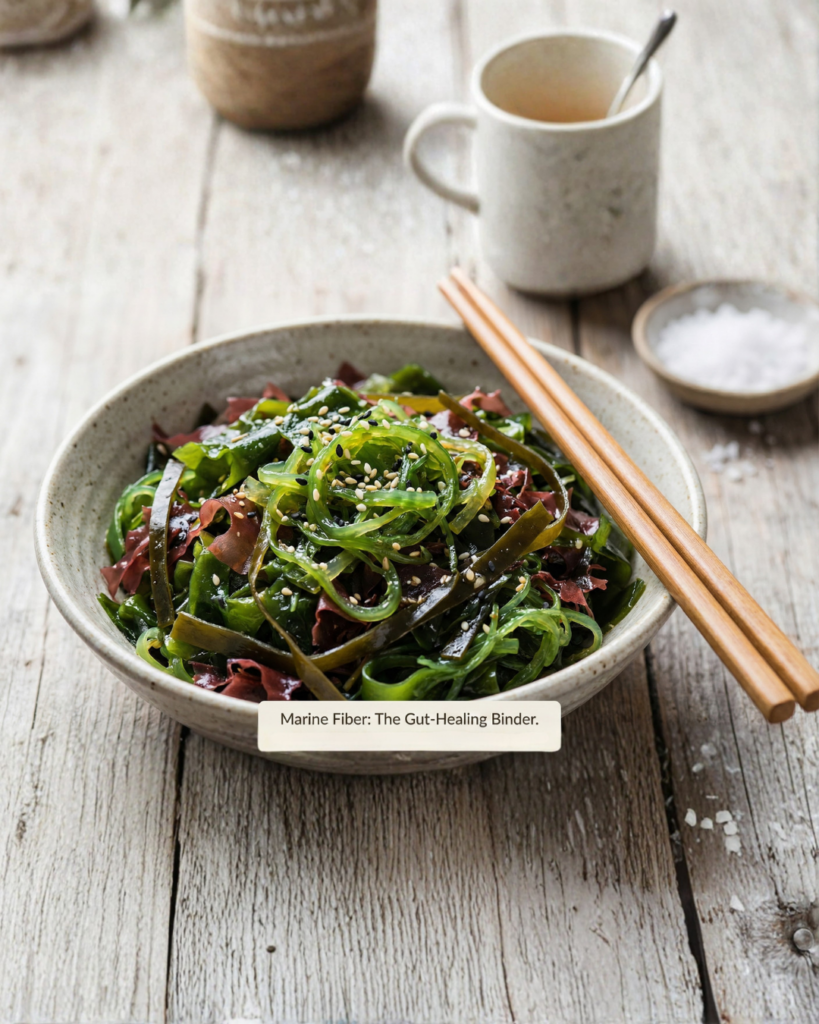
4. Marine Fiber (The Superfood)
- Source: Kelp, Wakame, Kombu (Alginates and Sulfated Polysaccharides).
- The Benefit: These are biologically unique. They act as “bio-communicators.” They bind to toxins and heavy metals, improve mineral absorption, and crucially, they support bile recycling. They increase softness without the abrasion of grains.
The Solution: Rethinking Your Plate
If “eating more fiber” hasn’t worked, it’s time to pivot. The goal is not just “bulk,” but motility via bile flow.
1. Stop fearing the grease.
You need to trigger the bile release. The most potent trigger is animal fat. This is why carnivore or high-fat diets often result in daily, easy stools—the bile flow is constant.
- Action: Add butter, tallow, or fatty cuts of meat to your meals.
2. Swap your fiber sources.
Stop eating abrasive “sawdust” fibers (bran, wheat based cereals) which irritate the gut.
- Action: Switch to soluble fibers (cooked fruits) or marine fibers (seaweed salad, kelp noodles) that lubricate and gel.
3. The New Plate Formula
Forget the “balanced diet” of dry grains and lean proteins. Try this formulation for better motility:
| Component | Goal | Examples |
| Protein | Structure | Beef, lamb, eggs, fish |
| Fat | Bile Release (Key) | Animal fats (suet, tallow, butter), fatty meat |
| Fiber | Gelling & Binding | Stewed apples, pears, seaweed, kelp |
| Avoid | Abrasive Bulk | Wheat bran, processed fiber bars, dry cereals |
Conclusion
“Fiber” isn’t a single thing, and it certainly isn’t a magic cure-all. Stool frequency and quality are driven primarily by bile flow and fat intake, not just fiber quantity.
The simple explanation is this: Grain fiber bulks. Fruit fiber gels. Seaweed fiber binds toxins. But none of them replace fat.
If you are struggling to go, don’t just reach for the bran flakes. Look at your fat intake. Remember: No fat = No bile = No poop. It is physiology, not opinion.
Frequently Asked Questions
Is fiber really not that important for pooping?
Fiber plays a role, but it cannot do the job alone. It needs bile to move. Without the lubrication from bile (which comes from eating fat), fiber just creates a dry, painful blockage.
Why did you remove whole grains from the recommendation?
Insoluble fiber found in processed grains (like wheat bran) is abrasive. It scrapes the gut wall and absorbs water. Without enough fat, this type of fiber often makes constipation worse, not better.
Why is animal fat specifically recommended?
Animal fat is the most potent stimulator of Cholecystokinin (CCK), the hormone that tells your gallbladder to squeeze out bile. Vegetable fats can work, but animal fats are often more effective for this specific physiological trigger.
What is the best fiber for “detoxing”?
Marine fibers (seaweed). Unlike grains, they contain alginates that bind to heavy metals and toxins in the digestive tract and carry them out of the body.
Can I just take a fiber supplement?
Most supplements are psyllium (mucilaginous). They work as a temporary fix to soothe the gut, but they do not stimulate bile release. They should be used with caution and plenty of water, and should not replace dietary fat.
DISCLAIMER: The information provided in this article is for educational purposes only and is not intended as medical advice. It is not a substitute for professional medical diagnosis or treatment. Always consult with your healthcare provider before making significant changes to your diet, especially if you have a history of gallbladder issues or digestive disorders.
Resources
https://pmc.ncbi.nlm.nih.gov/articles/PMC8782647
https://pubmed.ncbi.nlm.nih.gov/2928726
https://pubmed.ncbi.nlm.nih.gov/2831263
https://pmc.ncbi.nlm.nih.gov/articles/PMC3654245
https://pmc.ncbi.nlm.nih.gov/articles/PMC5548066
https://seaflawlessskin.com/?page_id=9982