


This guide is designed to be a long-term reference for educators, professionals, and curious skincare enthusiasts. You can navigate it non-linearly—moving by bioactives category, skin concern, or section depending on what you are trying to understand.
What Are Bioactives?
Bioactives are naturally occurring compounds that exert a measurable biological effect on living tissue. In skincare, these compounds influence hydration, barrier integrity, inflammation response, oxidative stress, and cellular renewal.
Seaweed is uniquely rich in bioactives because it evolved to survive constant environmental stress, such as UV exposure, salinity changes, and wave impact. To adapt, seaweeds developed a diverse chemical toolkit that aligns remarkably well with human skin physiology. Consequently, seaweed is not a trend; it is one of the most biologically compatible resources used in skincare.
Where These Bioactives Come From
Seaweed encompasses many marine macroalgae species living in coastal ocean environments. Different seaweeds contain different combinations of bioactive compounds.
- Brown Seaweeds (Kelp): Includes genera like Macrocystis and Laminaria. They are rich in polysaccharides, trace minerals, and phlorotannins.
- Red Seaweeds: Includes Chondrus and Porphyra. These are known for hydrating polysaccharides, MAAs, and phycobiliproteins.
- Green Seaweeds: Includes Ulva and Codium. These contain amino acids, ulvan, chlorophyll, and vitamins.
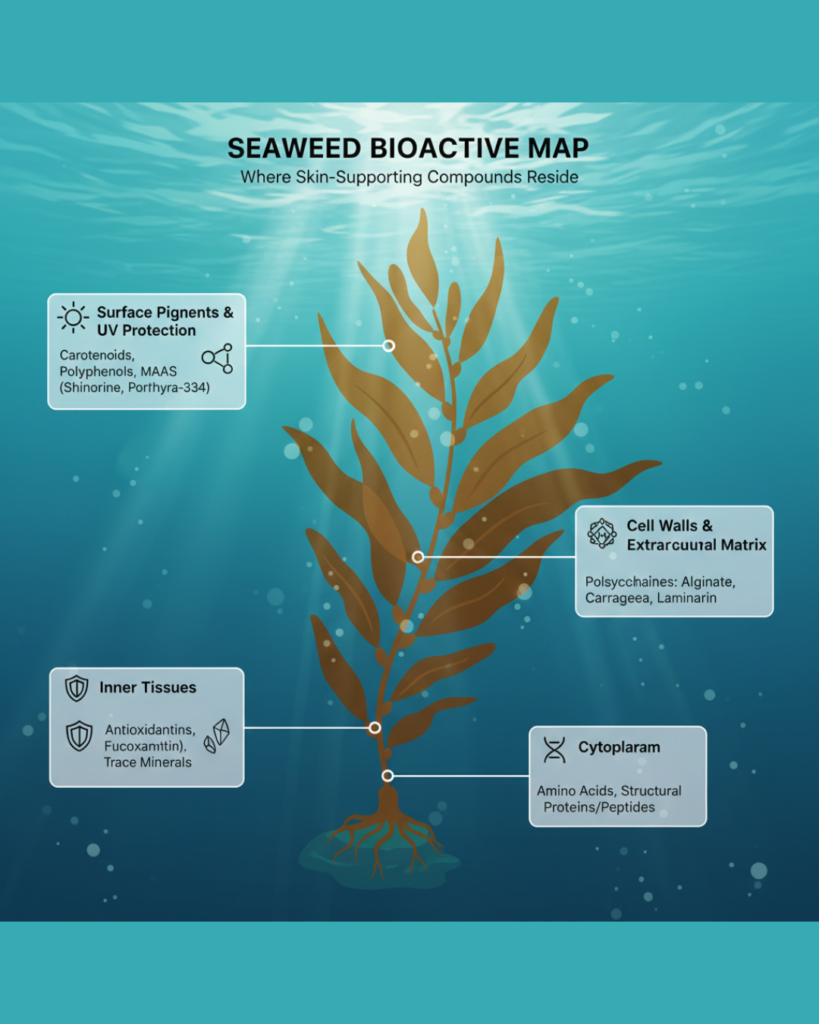
Where the Bioactives Reside:
- Cell Walls & Extracellular Matrix: Home to polysaccharides like alginate, carrageenan, and laminarin.
- Inner Tissues: Rich in antioxidants such as phlorotannins, fucoxanthin, and minerals.
- Cytoplasm: Contains amino acids and structural peptides.
- Surface Pigments: Stores carotenoids, polyphenols, and MAAs.
Why Seaweed Differs from Land Actives
Seaweed bioactives differ from terrestrial plant compounds in several critical ways:
- Natural Water-Compatibility: They are naturally water-compatible and mirror the saline environment of human skin. Furthermore, human embryonic fluid shares similarities in mineral composition with seawater.
- High Bioavailability: Seaweed compounds interact effectively with skin biology; skin cells recognize and utilize them efficiently.
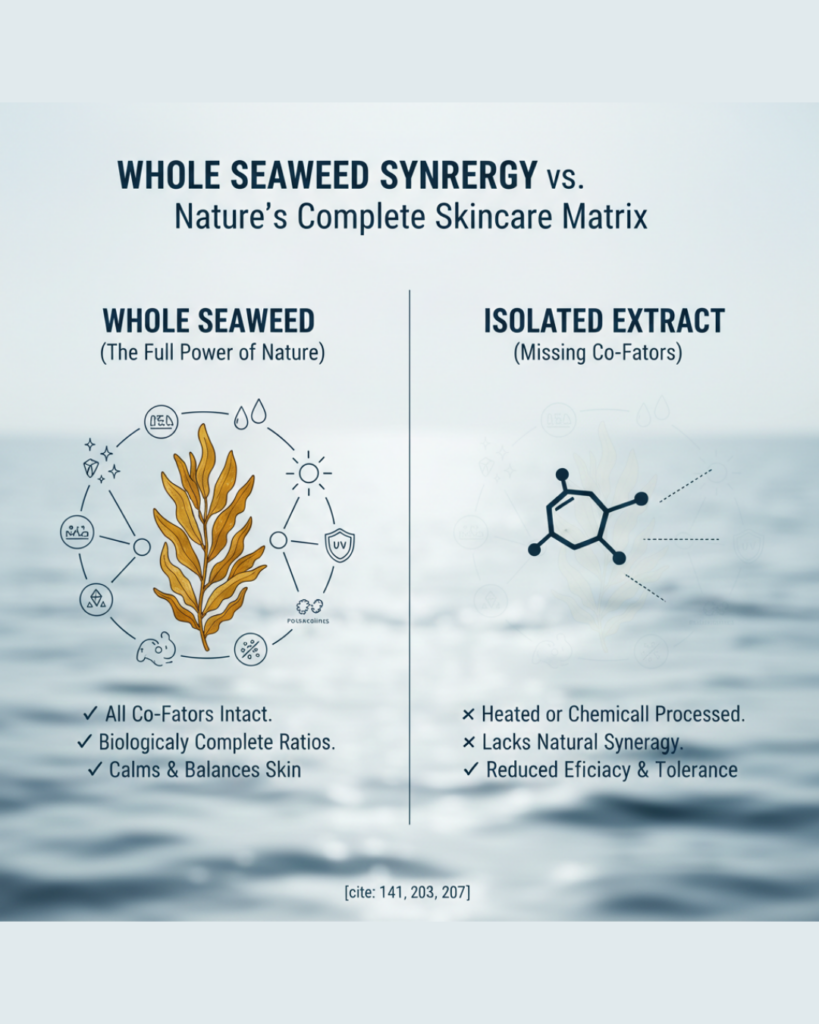
- Synergistic Matrices: They exist in complex, complementary ratios rather than isolated compounds. Consequently, whole seaweed often outperforms single extracts because the natural co-factors remain intact.
Deep Dive: The 7 Major Bioactives Categories
1. Hydration and Barrier Repair
Seaweed excels at maintaining skin moisture through unique polysaccharides and osmolytes.
- Alginate: A film-former that retains moisture and protects micro-wounds.
- Laminarin (β-glucan): A soothing bioactive that hydrates and supports barrier repair.
- Carrageenan: A hydrating polymer that forms a breathable film to smooth skin texture.
- Floridoside: A red-algal osmolyte that acts as a humectant and antioxidant under UV stress.
- Taurine & Betaine: These boost hydration; Taurine supports the Natural Moisturising Factor (NMF), while Betaine reduces Transepidermal Water Loss (TEWL).
- Alginate Oligosaccharides: Specifically boost keratinocyte hydration and tight-junction integrity.
2. Collagen Support and Anti-Ageing
Marine compounds target the extracellular matrix (ECM) to combat visible signs of ageing.
- Fucoidan: A sulfated polysaccharide that boosts collagen and inhibits enzymes (MMP-1) that break down collagen.
- Ulvan: An antioxidant that inhibits elastase and collagenase to support ECM remodeling.
- Eckol: A phlorotannin that scavenges reactive oxygen species (ROS) and reactive nitrogen species (RNS) to reduce wrinkles.
- Fucophlorethols: Provide matrix protection and elastase inhibition to improve firmness.
- Spermidine: A polyamine that supports autophagy and may improve cellular renewal.
3. Brightening and Pigmentation Control
Marine compounds offer natural alternatives for evening out skin tone and reducing hyperpigmentation.
- Dieckol: A potent anti-tyrosinase agent that reduces drivers of hyperpigmentation.
- Phlorotannins: Strong antioxidants that act as anti-tyrosinase agents and provide anti-glycation benefits.
- Fucooligosaccharides: Modulate the tyrosinase pathway for brightening effects.
- Fucoxanthin: A carotenoid that supports even tone and elasticity.
4. Sun Protection and Environmental Defense
Algae have evolved sophisticated mechanisms to survive harsh sunlight.
- Shinorine (MAA): A natural UV absorber that reduces photoaging.
- Porphyra-334 (MAA): A strong UVA/UVB filter that calms UV-induced inflammation.
- Palythine (MAA): A UV filter and ROS quencher that supports the barrier during sun exposure.
- Lutein: A carotenoid that provides protection against blue light and improves skin luminance.
- Chlorophyllide: A pigment that offers photoprotective antioxidant benefits.
5. Soothing and Acne Care
For sensitive or blemish-prone skin, seaweed offers antimicrobial and microbiome-balancing properties.
- Algal Lectins: Proteins with anti-biofilm properties that support a clearer skin ecology.
- Bromophenols: Found in red algae, these are antimicrobial and help preserve clear skin.
- Chlorophyll a: Provides antibacterial support for detoxifying masks.
- Zinc: A mineral that supports sebum balance and wound healing.
- Magnesium: A cofactor for over 300 enzymes that calms reactivity and improves hydration.
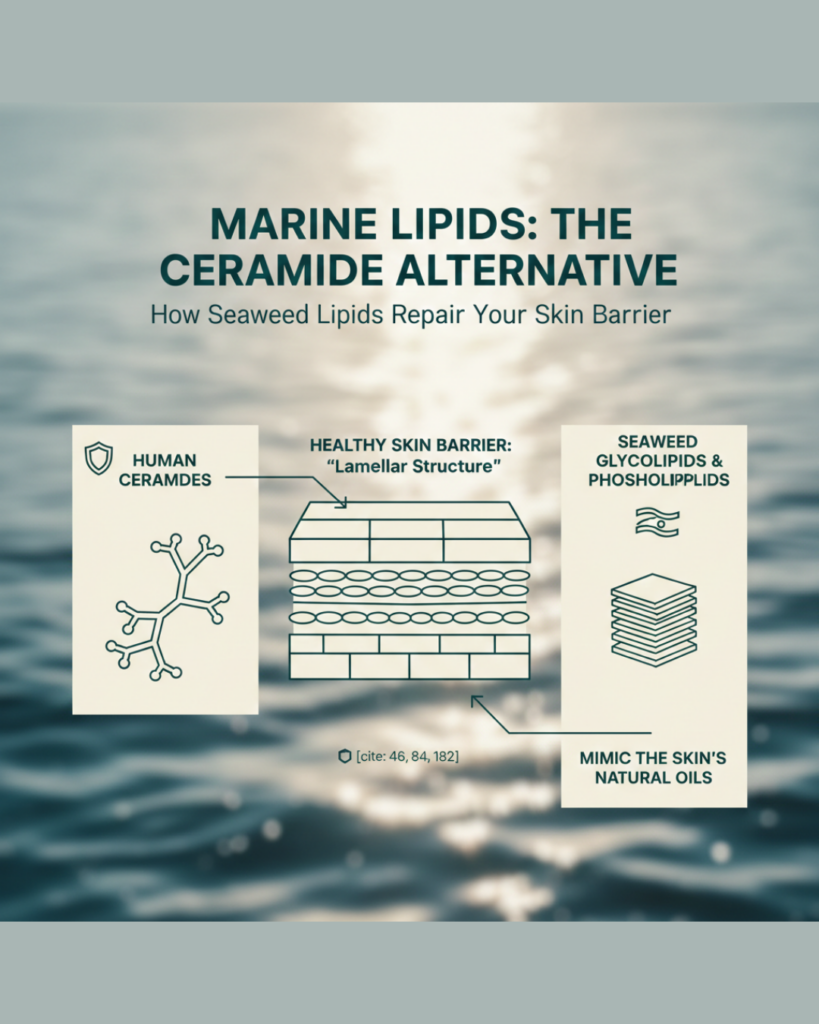
6. Lipid Replenishment (Ceramide Alternatives)
Algal lipids mimic the skin’s natural oils to reinforce the barrier and improve suppleness.
- Glycolipids (MGDG/DGDG): Membrane-mimetic lipids that aid in the delivery of actives and calm inflammation.
- Phospholipids: Support the lamellar structure of the skin to strengthen the barrier.
- Omega-3s (EPA, DHA, SDA): Essential for resolving inflammation and supporting barrier lipids.
- Fucosterol: A sterol that improves barrier function, elasticity, and anti-photoaging benefits.
- Squalene: An algal-derived emollient that replenishes sebum-like lipids.
7. The Dietary Connection (Gut-Skin Axis)
Many seaweed bioactives provide dual benefits when consumed, influencing skin health from within.
- Fucoidan: Orally supports the gut-skin axis and offers systemic photoprotection.
- Laminarin: Aids mucosal immunity and resilience when ingested.
- Iodine: A trace mineral that supports skin homeostasis via the thyroid axis.
- Vitamin C & E: Act as collagen cofactors and lipid antioxidants topically and through diet.
Bioactives by Skin Concern
| Skin Concern | Key Seaweed Bioactives | How They Help |
| Dehydration | Alginate, Laminarin, Polysaccharides | Create a breathable, water-binding matrix |
| Sensitivity | Fucoidan, β-glucans, Minerals | Calm inflammatory signaling and strengthen the barrier |
| Barrier Damage | Amino acids, Minerals, Polysaccharides | Restore integrity without forced exfoliation |
| Dullness | Antioxidants, Trace elements, Fucoxanthin | Protect against oxidative stress and support cellular energy |
| Aging Support | Polyphenols, Peptides, Fucoxanthin | Support collagen and neutralize free radicals |
Real-World Use: When Seaweed Excels
Seaweed is particularly supportive when:
- Skin feels dry and oily at the same time.
- The barrier feels damaged after over-exfoliation.
- Skin feels stressed after travel or illness.
- Everything suddenly causes redness or actives feel too aggressive.
Whole Seaweed Versus Extracts
Many skincare products rely on seaweed extracts, isolating single compounds through heat, solvents, or bleaching. While extracts offer targeted delivery, they often remove the co-factors required for proper function.
Whole seaweed contains minerals, polysaccharides, antioxidants, and amino acids in biologically complementary ratios. This synergy is difficult to replicate artificially and is responsible for seaweed’s calming, fast-acting nature on the skin.
Sustainability & Ethics
Seaweed bioactives are regenerative by nature. Unlike land-based crops, seaweed grows without freshwater, fertilizers, or pesticides.
When harvested responsibly, seaweed regrows quickly. Sustainable hand-harvesting techniques remove only a portion of the plant, allowing regrowth while maintaining the integrity of the ecosystem. Seaweed forests also play a critical role in ocean health by supporting biodiversity, stabilizing coastlines, and sequestering carbon.
Common Misconceptions
- “Seaweed is just for hydration”: It actually provides a complex array of minerals, antioxidants, and prebiotics for total skin resilience.
- “Algae extract and seaweed are interchangeable”: They are not. “Algae” includes microalgae and lab-grown organisms, whereas “seaweed” refers specifically to marine macroalgae.
- “Processing doesn’t matter”: Excessive heat or bleaching can degrade the very compounds that make seaweed effective.
How to Read a Label
- Ingredient Position: Seaweed listed early indicates a meaningful concentration.
- Species Identification: Specific species names matter more than generic “algae” or “seaweed extract”.
- Water Content: Water as the first ingredient can dilute bioactive density significantly.
- Whole vs. Extract: Whole seaweed or slurry retains more bioactive complexity than isolated extracts.
Conclusion
Seaweed is not a trend; it is one of the most biologically compatible resources available to skincare. Shaped by millions of years of evolution, marine bioactives offer unique mechanisms to nourish, protect, and repair the skin barrier. By choosing whole seaweed formulations that respect the plant’s natural synergy, you provide your skin with the complex nutrition it needs to stay resilient against modern stressors.
Resources
https://pubmed.ncbi.nlm.nih.gov/31817709
https://pubmed.ncbi.nlm.nih.gov/33809936
https://pubmed.ncbi.nlm.nih.gov/36005543