
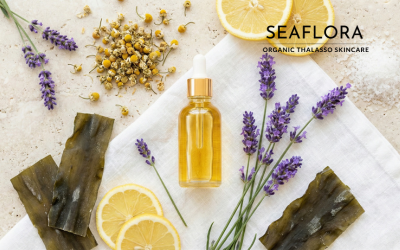
The demand for natural ingredients in skincare has never been higher. Yet, one ingredient remains a mystery on many labels: the fragrance. We all love the idea of botanical scents. However, understanding the difference between synthetic and natural fragrance is crucial. It matters for your skin’s health. In this post, we uncover what labels aren’t telling you. We also explain how to choose the safest option for your skin.
Key Takeaways
- “Natural fragrance” includes plant-derived scents. However, quality matters more than the label.
- The Loophole: Labels often hide complex mixtures. Therefore, look for brands that list specific oils.
- Potency: Essential oils are active ingredients. High-quality oils offer benefits. Conversely, cheap oils can irritate.
- Know the Difference: “Fragrance-free” means no added scent. In contrast, “unscented” often contains masking chemicals.
- Listen to Your Skin: Sensitive skin types should choose fragrance-free. But healthy skin can enjoy natural aromatic oils.
What Actually Qualifies as “Natural Fragrance”?
You see “natural fragrance” on a label. You likely think of fresh flowers. It sounds gentle, doesn’t it? However, the reality is slightly more complex.
Generally, “natural fragrance” means the scent comes from nature. This includes ingredients like essential oils. It also includes plant extracts. But simple labels can be misleading. In fact, a single natural scent profile is complex. It can actually be a blend of dozens of different plant extracts.
Complexity is Key Nature is complex. For example, a “natural lemon scent” isn’t just one molecule. It contains compounds like limonene. It also contains citral. These are naturally occurring. Yet, they are powerful.
The “naturalness” of a scent doesn’t mean it is weak. On the contrary, natural fragrances are often biologically active. This is why they can have therapeutic benefits. However, it also means they require expert formulation. It’s not just about the origin. Instead, it is about the purity. It is about the stability of the blend.
The “Fragrance” Loophole: Hiding Ingredients
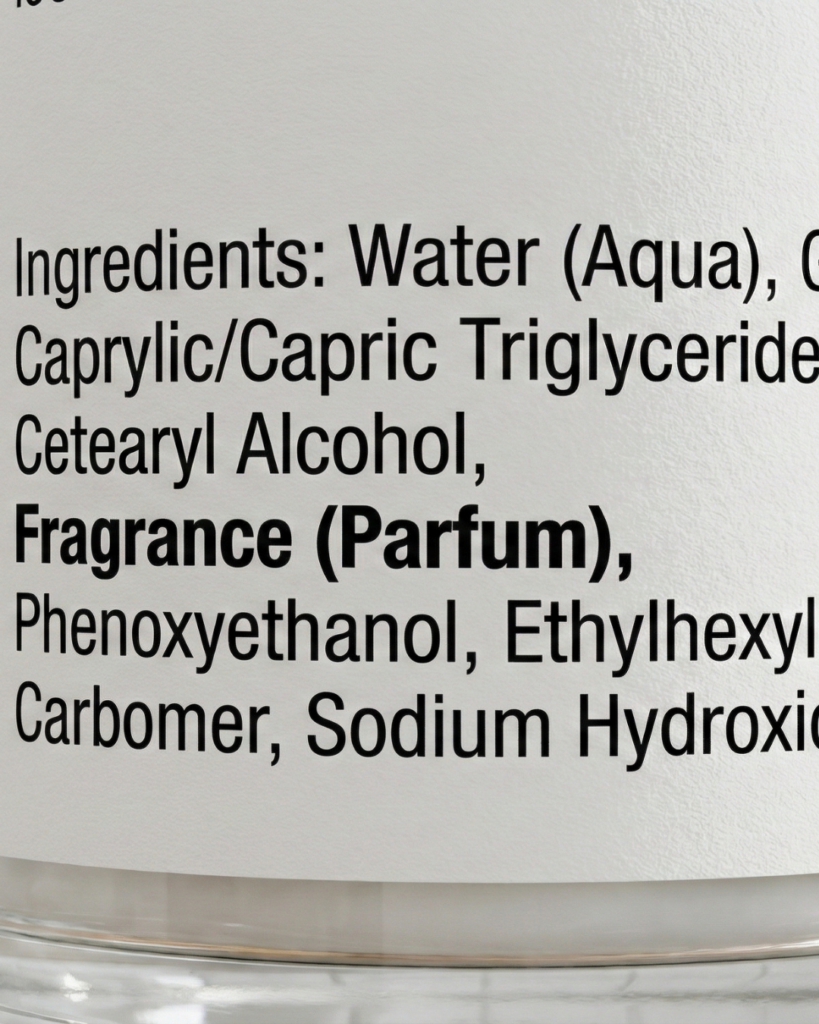
Have you ever felt lost reading a skincare label? You aren’t alone. The word “fragrance” (or “parfum”) is a blind spot. It is a major issue in the beauty industry.
Current regulations allow companies to list “fragrance” as one ingredient. Brands originally did this to protect their secret formulas. Unfortunately, this creates a loophole. A single word can hide up to 100 different chemicals.
Consequently, “Fragrance” Might Contain:
- Natural Essential Oils: Concentrated extracts from flowers or fruits.
- Synthetic Chemicals: Lab-created molecules. They are designed to mimic nature.
- Masking Agents: Chemicals added to cover up smells.
When a brand hides behind the generic term “fragrance,” you cannot know the truth. You don’t know what you are applying. Therefore, this lack of transparency is the real issue. It is not necessarily the scent itself.

The Truth About Natural Essential Oils
Essential oils are often misunderstood. Some sources claim they are dangerous. On the other hand, others treat them as miracle cures. The truth lies in the middle. Basically, essential oils are potent, active ingredients.
At Seaflora, we believe in the therapeutic power of plants. When formulated correctly, essential oils offer incredible benefits. For instance, they can soothe the mind. They can even provide antibacterial properties.
Why Quality Matters The negative reputation of essential oils often comes from low quality. Cheap oils are indeed irritants.
- First, Oxidation: An oil might sit too long. It reacts with oxygen. As a result, it becomes irritating.
- Second, Adulteration: Some mass-market oils are impure. They are mixed with synthetic fillers.
- Third, Improper Dosage: Applying undiluted oils directly to the skin is unsafe.
However, professionally formulated skincare uses safe ratios. Do you have a healthy skin barrier? If so, high-quality natural aromas can be a safe part of your routine.
“Unscented” vs. “Fragrance-Free”: The Difference
Do you have sensitive skin? You likely hunt for products without scent. But did you know these terms are different? “Unscented” and “fragrance-free” are not the same thing.
Fragrance-Free: This is the gold standard for sensitive skin. It means the product contains no added scent agents. It has no perfumes. Therefore, what you smell is just the raw ingredients.
Unscented This term can be tricky. “Unscented” implies the product has no smell. However, manufacturers often add masking fragrances. These neutralize odors. You might not smell a perfume. But the chemical masking agents are still there.
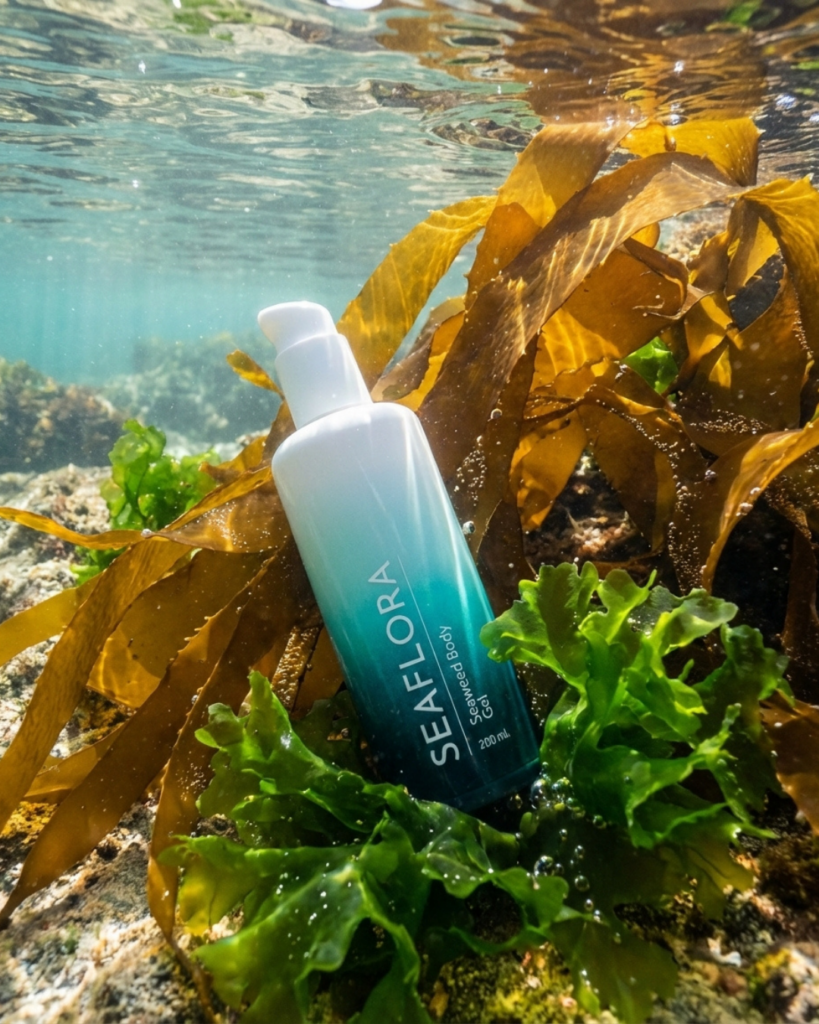
At Seaflora, we prioritize purity. For this reason, the majority of our products are formulated without any added fragrance. We strictly avoid the use of generic “parfum.” We know that hidden chemicals in these blends can cause endocrine disruption. Therefore, we want our formulas to be safe for every skin type. We are especially careful for those with rosacea and high sensitivity. Consequently, the only scent you will smell either comes from the raw ingredients or essential oils. You might detect the wild ocean. Or, you might smell organic seaweed and mineral-rich sea mud. We believe skincare should be effective, not irritating.
Summary:
- Fragrance-Free: No added scents. Best for reactive skin.
- Unscented: No smell. But may contain masking chemicals.
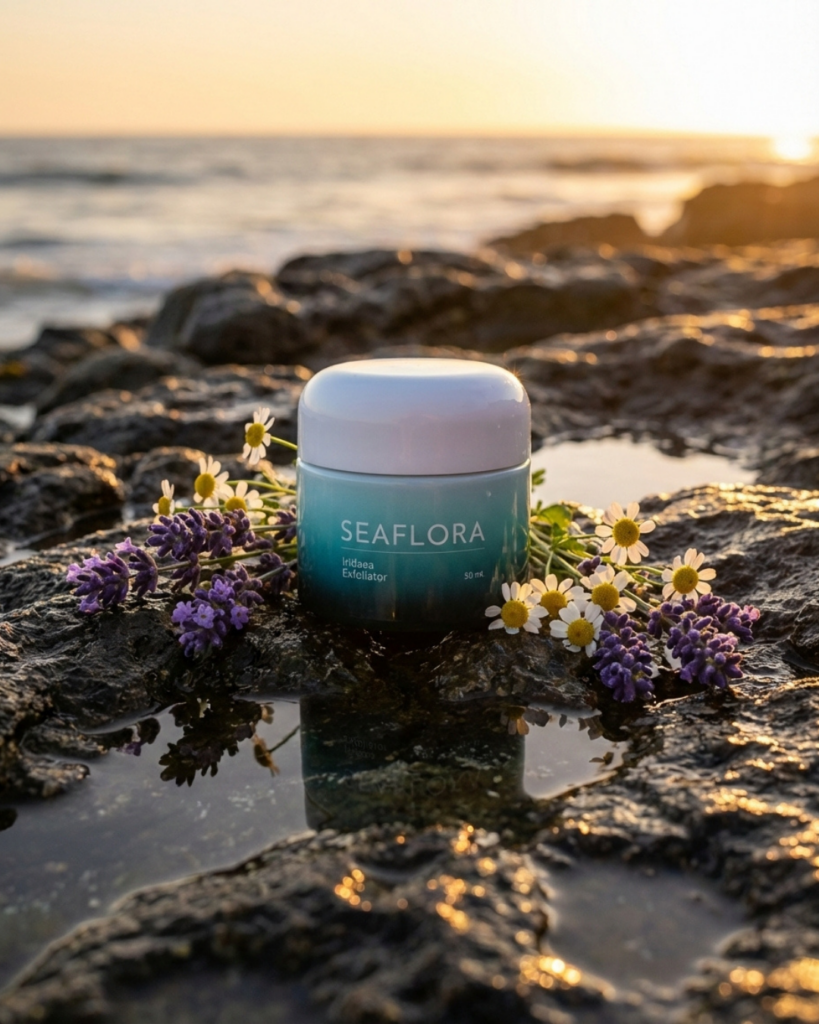
- Natural Scent: Scented with pure botanical oils.
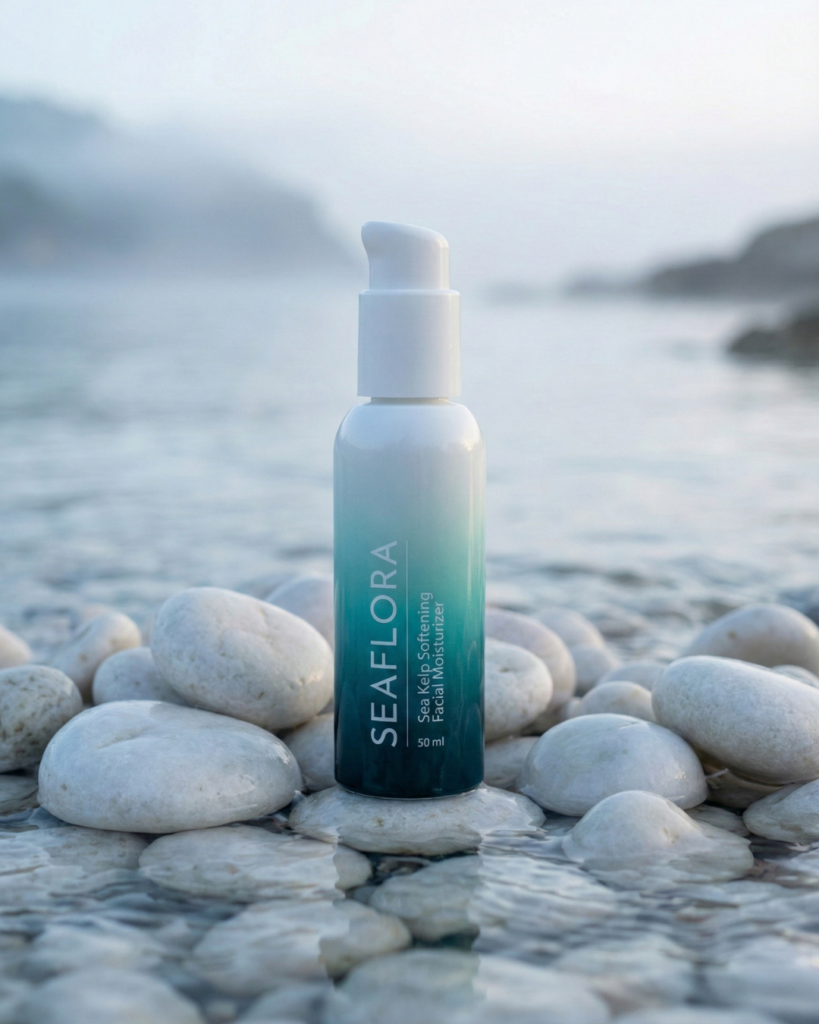
When to Choose Natural Fragrance
Should you ditch scents entirely? Not necessarily. Ultimately, it depends on your unique skin barrier.
Is your skin barrier damaged? Then skip the scents. For example, do this if you have:
- Active flare-ups of eczema.
- Open acne lesions.
- Known allergies.
Consequently, we recommend strictly fragrance-free collections. This is best for these skin types.
When to Enjoy Natural Scents: Alternatively, is your skin barrier healthy? Then you can enjoy natural essential oils. Scents play a huge role in stress reduction. In addition, a calming lavender note is lovely. It can turn a routine into a ritual.
The key is balance. High-quality skincare lines use essential oils sparingly. Thus, they support the formula. They do not overpower it.
Transparency: The New Natural Standard
The beauty industry is shifting. Consumers are smart. Because of this, you want to know what is in your bottle.
“Transparency” means a brand lists the specific essential oils. They list them on the box. For example, they list Lavandula Angustifolia Oil. They do not just write “Parfum.”
What to Look For:
- Full Lists: Brands that disclose every ingredient.
- Education: Companies that explain why an oil is used.
- Source Quality: Brands that prioritize organic plants.
In short, look for pride. If a brand is proud of their ingredients, they won’t hide them.
Conclusion
“Natural” doesn’t automatically mean simple. But it can be wonderful when done right. The world of fragrance is complex. Yet, your choice doesn’t have to be.
Do you love sensory experiences? Then look for transparent brands. However, do you have sensitive skin? Then stick to true fragrance-free options. Finally, listen to your skin. It is the best guide you have.
Frequently Asked Questions
What does “natural fragrance” really mean? It usually means the scent is derived from raw plants. However, look for brands that list the specific oils.
Are essential oils bad for skin? Not inherently. Actually, essential oils are powerful active ingredients. When they are high-quality, they are generally safe.
Is “unscented” better than “fragrance-free”? No. “Fragrance-free” is generally safer. This is because it contains zero added scent agents.
How do I know if a scent will irritate me? Always patch test. Apply a small amount behind your ear. Then, wait 24 hours. If your skin remains calm, the product is likely safe.
Resources
https://pubmed.ncbi.nlm.nih.gov/29280987
https://pubmed.ncbi.nlm.nih.gov/21315328
https://pubmed.ncbi.nlm.nih.gov/19125719